
Thai Basil vs Sweet Basil: Differences, Uses and Ordering Tips
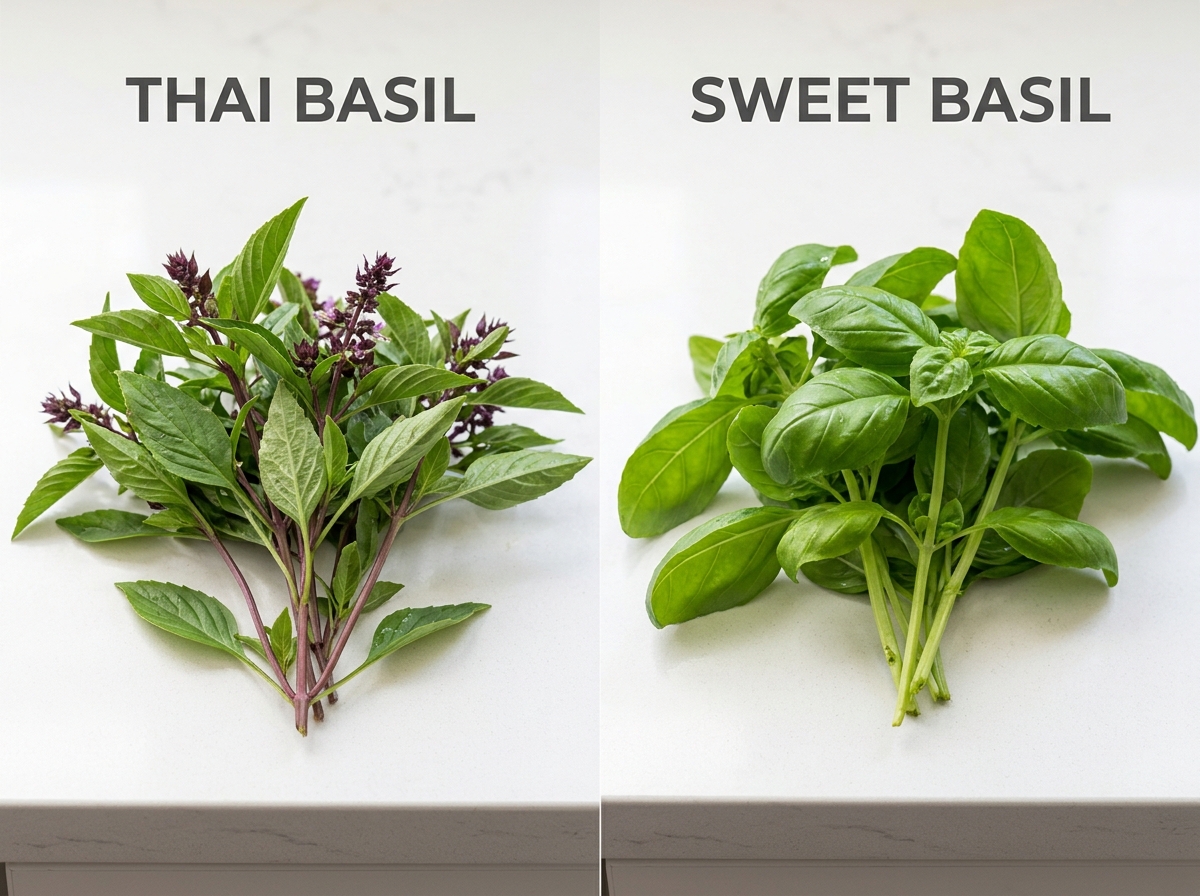
Are Thai basil and sweet basil the same herb?
They are the same species but different varieties. Sweet basil is Ocimum basilicum, and Thai basil is a variety of it, Ocimum basilicum var. thyrsiflora, according to Iowa State University Extension. They look, taste and cook differently, so a purchase order should name the one the recipe needs.
ProduceXpress lists both: basil in a 1 lb bag and Thai basil in a 1 lb bag.
What is the difference between Thai basil and sweet basil?
Leaf shape and stem color are the quickest way to tell them apart, followed by flavor and how each holds up to heat.
| Detail | Thai basil | Sweet basil |
|---|---|---|
| Botanical name | Ocimum basilicum var. thyrsiflora | Ocimum basilicum |
| Leaves | Narrower leaves | Larger, bright green leaves, about 2 to 3 inches long |
| Stems and flowers | Purple stems, pink-purple flowers | White flowers |
| Flavor | Sweet and anise-like, hints of licorice, slight spice | Sweet, with clove and floral notes |
| In hot cooking | Holds up to high heat | Best added at the end |
| Common uses | Thai curries, stir-fries, pho | Pesto, tomato sauces, Italian dishes |
| ProduceXpress format | 1 lb bag | 1 lb bag |
Appearance and flavor descriptions come from Iowa State Extension. The Herb Society of America's basil guide attributes sweet basil's clove note to eugenol and its floral scent to linalool. Pack details reflect the ProduceXpress listings checked October 30, 2026.
Anise is not unique to Thai basil. UF/IFAS Extension describes sweet basil as having licorice and clove notes too. The difference is how strong the anise character is, which is why a side-by-side taste beats a written description.
Is Thai basil the same as holy basil?
No. Holy basil is a different species, Ocimum tenuiflorum (formerly O. sanctum), according to Iowa State Extension and N.C. State Extension. Its flavor combines clove, mint and basil notes.
The names overlap in practice: some herb guides and seed lists include "Thai" in the name of holy basil types. Put the full name on your purchasing specification, for example "Thai basil (O. basilicum var. thyrsiflora), 1 lb bag", so the chef, buyer and receiving team mean the same herb.
When should a kitchen choose Thai basil?
Choose Thai basil when the dish needs its anise character or when the herb goes into a hot wok or simmering curry. NDSU Extension notes that Thai basil withstands high-temperature cooking better than sweet basil. UF/IFAS Extension calls it a staple in Thai cooking for curries and stir-fries, and UF/IFAS also suggests adding it to pho.
Choose sweet basil for pesto, tomato sauces and Italian dishes, and add it at the end of cooking to keep its delicate flavor, as NDSU recommends. For a small finishing leaf on the plate, micro basil is a separate option covered in our microgreens guide.
Can you substitute sweet basil for Thai basil?
You can test it, but expect a different dish. Sweet basil has less anise and does not hold up as well in high heat, and Thai basil's anise can stand out in a dish built around sweet basil, such as a classic pesto. There is no published conversion ratio, so use a controlled tasting:
- Make a reference sample of the dish with the basil the recipe calls for.
- Make a second sample with a measured amount of the substitute.
- Taste both in the finished dish, at serving temperature.
- Adjust the amount and the point in cooking where the basil goes in.
- Record the approved substitute and amount on the prep sheet before it reaches service.
If the basil is central to a signature dish, confirm availability of the right variety instead of approving an untested swap.
How should restaurants store basil?
Keep basil out of the coldest part of the walk-in. Basil is chilling-sensitive: Penn State Extension says leaves deteriorate below 50°F, and Illinois Extension warns that leaves can blacken at that temperature. The USDA commercial storage handbook recommends about 54°F (12°C) at very high humidity, where basil keeps about two weeks under commercial conditions.
Most restaurant coolers run much colder than that, so:
- Store basil in the warmest part of the cooler, such as the top shelf, or in a separate warmer space if your food-safety plan allows it.
- Keep it in its packaging or a loosely closed bag to hold humidity.
- Do not stack it under heavier product.
- Order closer to use rather than holding a large stock.
Varieties differ. A UC Davis study of basil chilling sensitivity found Genovese and lemon basil more sensitive to cold storage than Thai, purple and holy basil. That does not make Thai basil safe in a near-freezing cooler, but it explains why sweet basil often shows damage first. UC Davis also notes that chilling injury depends on both temperature and time, so a short cold spell does less harm than days in the coldest spot.
Woody herbs like thyme and rosemary need the opposite treatment. See our fresh vs dried herbs guide for those.
What should staff check when basil arrives?
Check the herb name and pack against the order, then look for black or brown patches, wilting, slime and crushed leaves. Dark spotting on otherwise fresh leaves is a sign of chilling injury somewhere in the chain. Record the received date, move basil to its storage spot promptly, and report problems with a photo of the label.
For herbs that need washing, University of Minnesota Extension recommends rinsing under cool running water near preparation time instead of soaking. Basil leaves bruise easily, so handle them gently and dry them before chopping.
Where can restaurants buy Thai basil and sweet basil?
Both are in the ProduceXpress catalog: basil and Thai basil in 1 lb bags, plus micro basil for garnish. Check the live product pages for current availability and pack details, then order online.
For other herb comparisons and buying guides, see culantro vs cilantro and our fresh herbs buying guide.
Product details and linked sources checked October 30, 2026. Follow current product labels and your kitchen's food-safety procedures.