
Fresh vs Dried Herbs: Thyme, Rosemary, Sage and Oregano for Restaurants
How much fresh herb equals dried?
Use about three times as much fresh herb as dried: 1 tablespoon of fresh chopped herb is roughly 1 teaspoon of dried. University of Illinois Extension and University of Wyoming Extension both give this 3 to 1 starting point.
Treat it as a starting point, not a fixed rule. Illinois Extension notes that the ratio only works while the dried herb is still potent, and recommends checking dried herbs every six months by rubbing a little between your fingers. A faint or musty aroma means the jar should go.
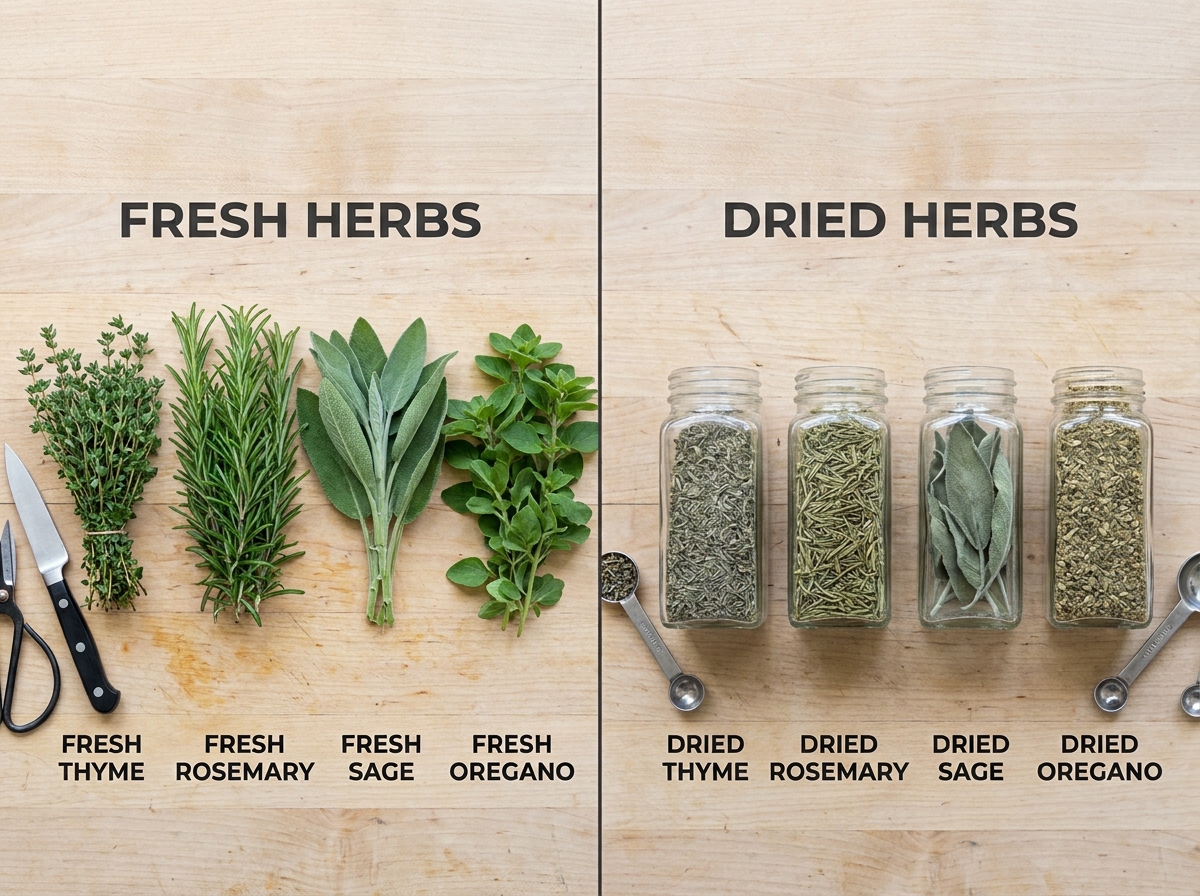
| Recipe says | Fresh herb to start with | Notes |
|---|---|---|
| 1 tsp dried thyme | 1 tbsp fresh thyme leaves | Strip leaves from the stem before measuring |
| 1 tsp dried rosemary | 1 tbsp fresh chopped rosemary | Chop finely; whole needles stay firm |
| 1 tsp dried sage | 1 tbsp fresh chopped sage | Taste early; fresh sage is assertive |
| 1 tsp dried oregano | 1 tbsp fresh oregano leaves | Add toward the end of cooking |
| ¼ tsp ground herb | 1 tsp dried crumbled, or about 1 tbsp fresh | Ratio from Wyoming Extension |
These are volume conversions. Restaurant prep sheets are usually written by weight, and no reliable published figure converts a pound of fresh thyme into teaspoons of leaves. Measure your own: strip and weigh the leaves from a sample of each delivery, and write that yield into the recipe.
Why do restaurants switch from dried to fresh woody herbs?
Fresh herbs give a brighter aroma and a better look on the plate, and they let a kitchen finish a dish with whole leaves or sprigs. Dried herbs are convenient for long-cooked bases and dry rubs. Many kitchens use both: dried in the long braise, fresh at the finish.
If a recipe was written for dried herbs, convert it with a test batch before changing the prep sheet:
- Make the recipe as written with the dried herb.
- Make a second batch with three times the volume of fresh herb.
- Taste both at serving temperature, with the sauce and garnish they normally get.
- Adjust the fresh amount, then record it by weight for the line.
The same steps work in reverse when fresh stock runs short. Fresh Herbs: a Picture of Healthy Eating, a University of Nebraska–Lincoln and Rutgers extension publication, notes that swapping fresh in for dried tends to work better than going the other way, so test before relying on dried as a backup.
When should you add thyme, rosemary, sage and oregano?
Sturdy, woody herbs tolerate heat better than tender herbs. N.C. Cooperative Extension suggests adding sturdier herbs such as oregano, rosemary and thyme about 20 minutes before the end of cooking, while tender herbs like basil, chives, cilantro, dill and parsley go in during the last minute or two. Wyoming Extension gives the same guidance and adds that dried whole herbs can go in at the start.
In practice, whole sprigs of thyme or rosemary often go into stocks and braises earlier and come out before service. Illinois Extension notes thyme can usually be added toward the beginning of cooking. Decide timing per recipe during testing and write it on the prep sheet so it does not vary by cook.
How should restaurants order woody herbs?
Order by usable weight, not by habit. ProduceXpress lists these woody herbs as bagged products:
| Herb | Current ProduceXpress pack | Typical kitchen use |
|---|---|---|
| Thyme | 1 lb bag | Stocks, braises, roasting, finishing leaves |
| Rosemary | 1 lb bag | Roasts, potatoes, breads, infused oils |
| Sage | 4 oz bag | Brown butter, stuffing, pork, fried leaf garnish |
| Oregano | 4 oz bag | Tomato sauces, grilled meats, vinaigrettes |
Pack details were checked October 30, 2026. Check the live product page before ordering.
To size an order, multiply planned batches by the usable leaf weight each batch needs, divide by your measured leaf yield from a sample bag, subtract usable stock on hand, and round up to the pack. Thyme and rosemary stems are woody, so the stripped-leaf weight is less than the bag weight. Sage and oregano leaves are larger and easier to pick, but trim loss still matters. Our fresh herbs buying guide walks through that calculation with an example.
What should staff check when woody herbs arrive?
Check the label against the order, then look at the leaves and the cut stem ends. In its commercial storage handbook, USDA Agricultural Research Service guidance on perennial culinary herbs describes good quality as fresh, green leaves with no yellowing, decay, insect or mechanical damage, and notes that mold and bacterial decay develop especially on damaged leaves and cut stem ends.
At receiving:
- Match the herb and pack size to the purchase order.
- Look for yellowing, black or slimy leaves, mold at the stem ends, and crushed packaging.
- Smell a sample. Aroma is a quick freshness check for woody herbs.
- Record the received date and move the product to cold storage promptly.
These checks judge quality. They do not establish food safety, so follow your approved supplier and receiving procedures as well.
How do you store fresh thyme, rosemary, sage and oregano?
Keep them cold, humid and away from ripening fruit. The USDA handbook says these herbs are not chilling-sensitive and should be held as close to 32°F (0°C) as possible without freezing, and gives 90 to 95% relative humidity for oregano. Under those commercial conditions it lists about 2 to 3 weeks for thyme, rosemary and sage and 1 to 2 weeks for oregano. A restaurant walk-in that is opened all day will usually give less, so use those figures as an upper bound, not a promise.
The same source notes that these herbs are very sensitive to ethylene, which causes yellowing, leaf curl and leaf drop. Store them away from ethylene-producing produce such as ripening tomatoes, apples and bananas.
For opened bags, Purdue Extension and Illinois Extension suggest wrapping the herbs loosely in a damp paper towel inside a plastic bag in the refrigerator. Label the container with the herb and date, and use the oldest acceptable stock first.
Basil is the exception in a mixed herb order. It is chilling-sensitive and needs a warmer spot. See our Thai basil vs sweet basil guide for basil storage.
Can a kitchen dry its own surplus herbs?
Yes, small-leaf herbs such as thyme dry well. Wyoming Extension suggests tying them in loose bunches and hanging them in a warm place out of direct sun. Larger leaves like sage can be dried the same way. Strip the dried leaves, store them in airtight labeled containers, and check aroma before use.
Drying is a way to use surplus, not a reason to over-order. A bag sized to your actual prep is still cheaper than one that ends up on a drying rack.
Where can restaurants order thyme, rosemary, sage and oregano?
All four are in the ProduceXpress catalog: thyme, rosemary, sage and oregano. Check the product pages for current availability and pack details, then order online.
For tender herbs and garnishes on the same plate, see our fresh herbs guide, culantro vs cilantro comparison and microgreens guide.
Product details and linked sources checked October 30, 2026. Follow current product labels and your kitchen's food-safety procedures.